
What does 3D laser cutting mean for your part?
The term can describe several equipment arrangements. BLM GROUP explains that angled beam paths on tube can produce joint and edge features, while bent or hydroformed components can require multi-axis cutting systems or robotic arrangements that follow the formed surface. These are different production tasks even when both are described as 3D laser cutting.
Start a supplier discussion with two files: the shape arriving at the laser and the required finished shape. Mark the features that must be cut, their reference datums, and any surfaces that cannot be marked by supports. A photograph alone may hide a return flange, internal obstruction, or inaccessible face.
Match the incoming workpiece to the application review
A purchasing worksheet, not a specification or performance guarantee for a particular machine.
| Incoming part | Review first | Evidence to request |
|---|---|---|
| Straight tube with angled features | Profile handling and requested bevel geometry | Sample cut on the quoted configuration |
| Bent or hydroformed tube | Access to the formed surface and workpiece positioning | Application study and measured sample |
| Cab ring beam or formed frame | Whether cutting occurs before or after forming | Agreed production sequence and fixture scope |
| Structural beam | Section dimensions and required features | Drawing review for the proposed structural cutting system |
Straight tube bevel cutting: check the complete configuration
For straight stock, request a review of the proposed chuck, support, loading, unloading, and cutting-head arrangement against your tube drawing. BLM GROUP notes that tube movement, profile shape, and support needs make tube-machine selection different from flat-sheet selection. Do not compare machines solely by laser power.
Ask the quote to identify the approved profile range and the specific bevel features demonstrated on your sample. Record which options and software functions were used. Do not assume that a feature shown on one model is included in another model from the same supplier.
Bent tubes and formed components: establish the process sequence
BLM GROUP describes how bending can move previously cut features and why cutting some features after forming may be necessary. Its formed-tube guidance discusses multi-axis cutting and workpiece positioning. Use that distinction when evaluating a bent frame or cab ring beam: first establish whether the proposed laser receives straight stock or the formed assembly.
For your application review, request a proposed sequence covering forming, locating, cutting, unloading, and inspection. Ask who supplies any fixture, which revision of the part it supports, and how a design change would be handled. These questions define the scope of the purchase; they are not a claim that a standard LUMINARY machine supports every formed part.
Use a sample acceptance sheet before comparing speed
Prepare a short acceptance sheet listing each critical feature, its drawing requirement, the measurement method, and the person responsible for approval. Include the stock condition, fixture arrangement, program revision, and any finishing steps used for the demonstration. Have the supplier return the measured results with the sample.
A useful trial includes representative part changes as well as a repeat run. Record setup, loading, cutting, unloading, inspection, and rework separately. Compare accepted parts over the agreed trial period. A cutting-only cycle from a different geometry cannot establish the throughput of your own production route.
What should a 3D laser quote include?
Send the input and finished CAD files, material specification, wall thickness, overall envelope, part weight, critical features, daily quantity, and installation location. Request separate scope lines for machine configuration, fixtures, programming, sample approval, training, and service. Ask the supplier to identify exclusions and unresolved feasibility questions.
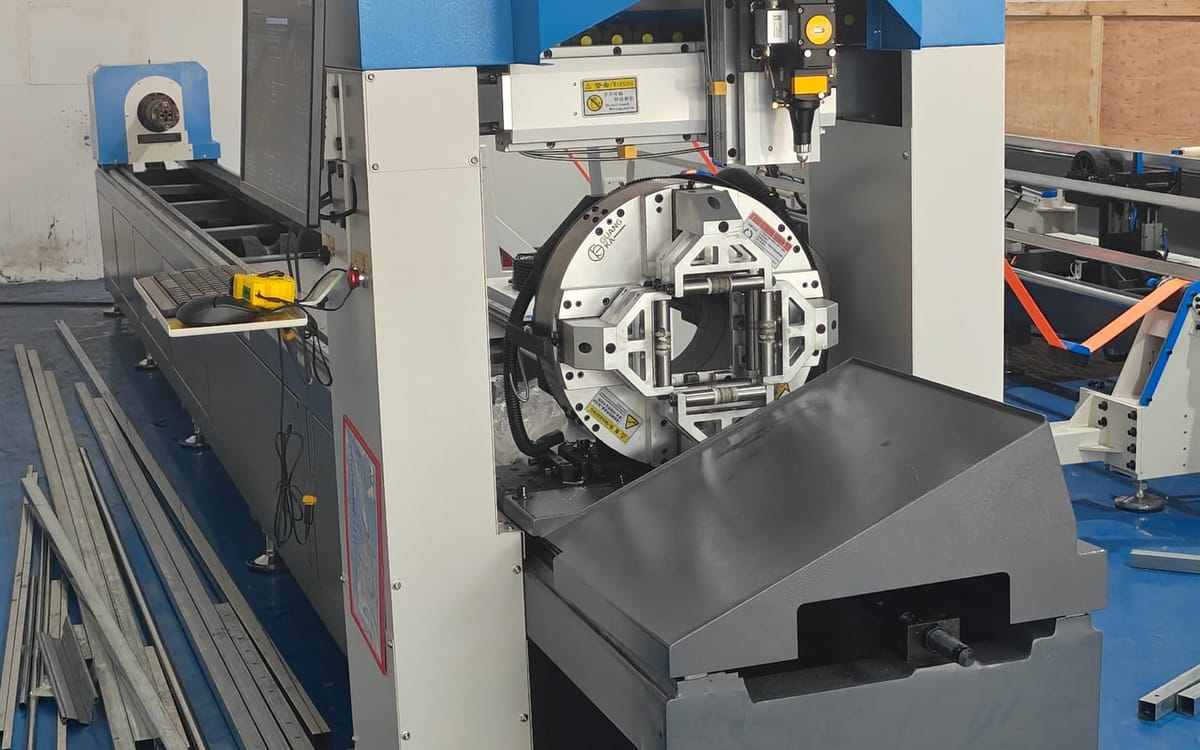
LUMINARY LASER can discuss the listed tube and structural cutting equipment with buyers through its Houston team. For bent or formed components, request an application review before selecting a machine. Confirm the supported geometry and configuration in writing; the equipment photo in this guide illustrates tube processing and is not proof of formed-part capability.
Technical references
Technical sources and scope.
Supplier-specific performance claims are not treated as universal. Confirm the selected process with controlled sample cutting and the final equipment documentation.
FAQs
Frequently asked questions.
Can a tube bevel laser automatically cut bent tubes?
Do not assume so. Ask the supplier to assess the formed workpiece, cutting access, positioning, and program on the proposed complete system. A bevel head specification alone does not establish bent-part capability.
Is a five-axis specification enough to select a machine?
No. Identify which axes move the head or workpiece and request a demonstration of the required part. The quote also needs to cover handling, fixtures where required, programming, and acceptance criteria.
What should I send for a cab ring beam cutting review?
Provide the incoming and finished CAD geometry, material, thickness, overall dimensions, weight, process sequence, critical drawing features, and production quantity. State whether the laser receives straight stock, a bent component, or an assembly.
Join the conversation
Reader discussion
Share a question or your experience with this topic. Comments appear immediately after submission. For a machine quotation, contact our team directly.
Loading reader comments…
Leave a comment